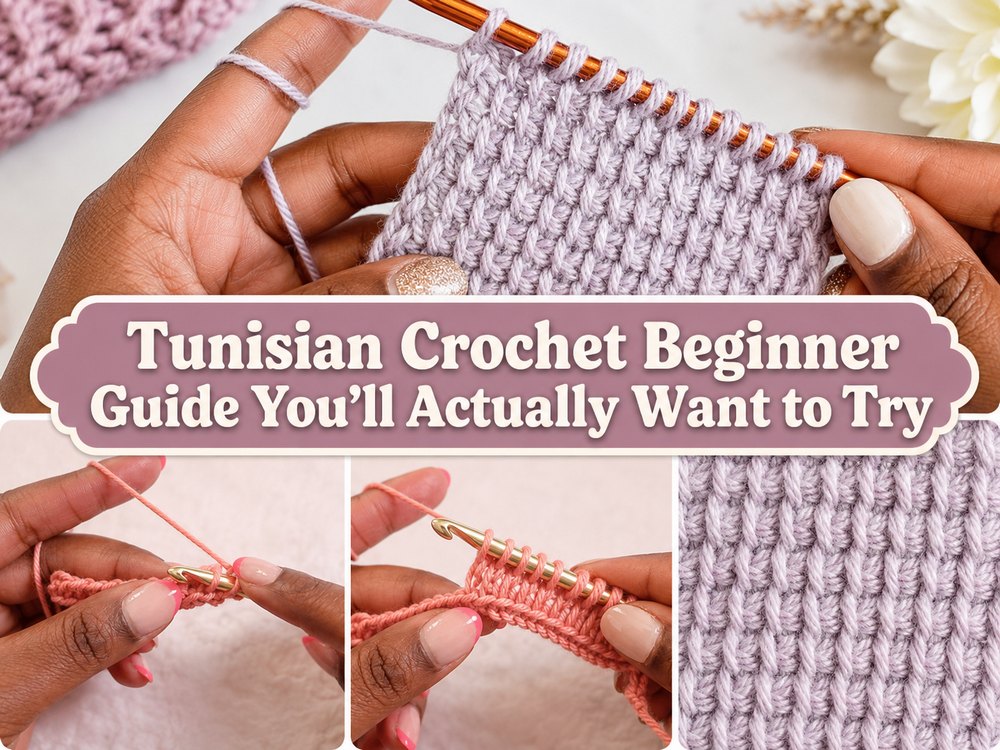

If you want to try something new but don’t want to get too overwhelmed, a simple Tunisian crochet swatch is a perfect first project. This guide walks you through the basic rhythm of Tunisian crochet, from starting your foundation to finishing with a neat edge.
Why You’ll Love This Project
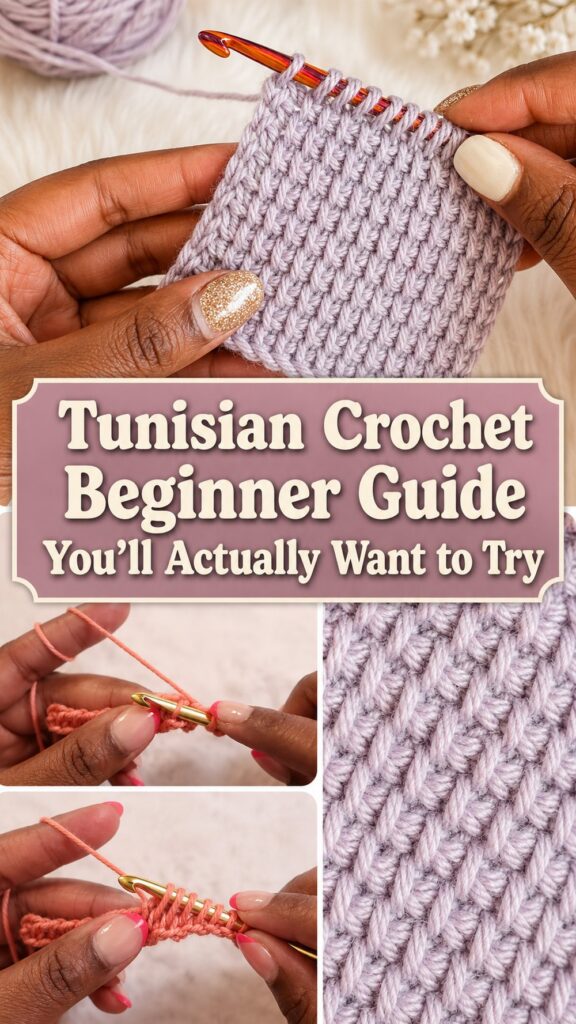
Tunisian crochet has a beautiful woven look that feels a little like knitting but still uses crochet techniques. It is calm, repetitive, and a great way to practice before making scarves, blankets, washcloths, or cozy home pieces.
Materials Needed
Tunisian crochet hook Yarn Scissors Yarn needle
Use a yarn and hook size that matches your desired fit and texture.
Best Yarn for This Project
Choose a smooth, light-colored yarn so you can clearly see your stitches. Medium-weight yarn is a nice choice for practice because it is easy to hold and shows the Tunisian simple stitch texture well.
Skill Level
Easy to start
Size and Fit Guide
Start with a foundation chain as wide as you want your practice piece to be. Keep working rows until the fabric is as long as you like. For a scarf, blanket or dishcloth just change the starting chain and work on until you get to the size you want.
Used stitches
- Chain stitch
- Tunisian Row Foundation
- Tunisian simple stitch
How to Make It Bind off Return Pass
Start the Foundation
Start with a normal crochet chain. Work into chain to pull up loops & keep on your hook. This is the first forward pass .
Work Return Pass
Yarnover and draw through the loops on your hook on the backstitch. This brings the row back across and sets up your piece for the next row.
Work in the Main Section
For the Tunisian simple stitch insert your hook into the vertical bars that run horizontally across the row, pull up loops and leave them on the hook. Then do the return pass again.
Continue this forward and back pass until your fabric is the size you want.
Edge Finish
When your piece is long enough, bind off across the row for a neater finished edge. Cut the yarn, fasten it off and bury the ends.
Tips to Help
Make sure your tension is loose enough so the loops will slide easily on the hook. Don’t pull the return pass too tightly. Keep count of your edge stitches so that the sides remain even. Blocking can help flatten out the fabric and soften any curling.
Mistakes to Avoid
- If you pull the loops too tight
- Missing the first or last stitch
- The pass that was never made
- Learn with fuzzy yarn
- Too tight binding off
customization ideas
For stripes, change colors every few rows. Practice with a small square or make a longer strip to use as a scarf or a wider piece to be a blanket panel. And when you’re comfortable you can also add a simple border.
Style Tips
Create your first Tunisian crochet project as a coaster, washcloth, scarf sample, blanket swatch, or stitch practice square. Make it in soft yarn and it makes a lovely beginner friendly handmade gift also.
Care Instructions
Cool water, Gentle wash, Reshape fabric while damp, Lay flat to dry. Always follow care instructions for the yarn you use.
Time Required
Depending on your speed, yarn, size and stitch pattern this may take you a few hours.
Summing it up
Tunisian crochet is a beautiful technique to learn and the simple stitch is the best place to start. Once you have the forward and return pass you can use that same rhythm for so many cozy projects.
FAQs
Can I use a regular crochet hook?
For a small practice swatch, you may be able to try it, but a Tunisian hook is better because it holds more loops.
Is Tunisian crochet hard for beginners?
No, it is beginner-friendly once you understand the forward pass and return pass.
Why is my Tunisian crochet curling?
Curling is common with Tunisian crochet. Relaxed tension, a border, or blocking can help.
What can I make after learning this?
Scarves, blankets, dishcloths, bags, and simple panels are great next projects.
Do I need to know knitting?
No, Tunisian crochet may look a bit like knitting, but it is worked with crochet-style movements.