A good crochet shawl with a diagram gives you two big wins at once: you get the beauty of lace or shaping, and you also get a visual roadmap that makes repeats easier to follow. I picked eight shawl tutorials from eight different sites so you can browse a nice mix of triangle, wrap, lace, and statement styles without repeating the same source. Several of these explicitly include diagrams or charts, while the others are strong visual tutorials with clear shaping and step-by-step structure. I also matched each image description to the tutorial’s overall look, yarn style, and color direction as closely as possible.
Water Pearl Crochet Shawl Diagram

This Water Pearl Crochet Shawl Diagram is a beautiful choice if you want a classic lace triangle with a true chart-led feel. The DROPS pattern explicitly says to follow diagrams A.1 to A.6, and it works from the bottom tip upward, so it is ideal for crocheters who like to “read the shape” as it grows. The finished shawl is wide enough to drape well, and the turquoise alpaca gives it a soft, elegant look. My best tip is to mark each completed chart section before starting the next so you do not lose your place in the lace. Tutorial.
Hashtags: #crochetshawl #crochetpattern #lacecrochet #shawldiagram
Supplies:
- DROPS Alpaca yarn, 200 g, color no. 2917 turquoise
- 3 mm crochet hook
- Stitch markers
- Yarn needle
Why it’s great: A true crochet diagram shawl that is perfect for chart lovers.
Arys Crochet Shawl Diagram

The Arys Crochet Shawl Diagram is one of the strongest picks here for anyone specifically wanting a diagram-based shawl. MyCrochetory notes that the PDF includes a detailed stitch chart, and the shawl grows from the central point outward into a classic triangle with lace repeats and a fan-and-picot edging. That makes it a smart project when you want both written help and a visual map. Fingering yarn keeps it light and drapey, and self-striping yarn will really highlight the lace transitions. A smart tip here is to use lifelines at the end of each repeat section before moving on. Tutorial.
Hashtags: #crochetshawl #crochetdiagram #triangleshawl #lacecrochet
Supplies:
- Fingering weight yarn
- Crochet hook suited to your yarn choice
- Stitch markers
- Yarn needle
- Blocking pins or mat
Why it’s great: It combines a detailed chart with elegant lace shaping in a very wearable crochet shawl.
Gift to Myself Crochet Triangle Shawl

This Gift to Myself Crochet Triangle Shawl is a great diagram-style alternative if you prefer easy texture over complex lace. Underground Crafter says it is worked side to side, increasing to the midpoint and then decreasing to the end, and the stitch pattern is reversible, so both sides look good. That makes it especially practical for everyday wear. One skein of self-striping light yarn gives you generous color movement without constant yarn changes. My favorite tip is to place a marker at the midpoint when you reach it so the decrease half stays balanced and stress-free. Tutorial.
Hashtags: #crochetshawl #triangleshawl #crochetwrap #shawlpattern
Supplies:
- Light weight self-striping yarn, about 1181 yards
- 5.5 mm crochet hook
- Stitch marker or scrap yarn
- Yarn needle
Why it’s great: The reversible texture and side-to-side shaping make this crochet shawl easy to wear and easy to understand.
Tuscan Moon Crochet Shawl

The Tuscan Moon Crochet Shawl is a lovely pick when you want a quick triangle with bold color movement. Moogly describes it as a triangle version of the Tuscan Sun stitch pattern, shown in Red Heart Colorscape, so the shawl has that rich, shifting palette that does a lot of the visual work for you. This is the kind of piece that looks impressive without needing fussy finishing. Since the yarn used is discontinued, plan your substitute first and choose one with long color changes so the crochet texture still stands out instead of getting visually muddy. Tutorial.
Hashtags: #crochetshawl #bohocrochet #triangleshawl #crochetwrap
Supplies:
- Color-shifting yarn or long-gradient substitute
- Crochet hook matched to your yarn
- Yarn needle
- Blocking tools
Why it’s great: This crochet shawl gives you strong color drama with a wearable triangle shape.
Netherfield Crochet Scarf Wrap Shawl

The Netherfield Crochet Scarf Wrap Shawl is a romantic rectangular option if you want something lighter and dressier than a big triangle. All About Ami describes delicate lace, scalloped edges, and a soft Superwash Merino in the shade Antique, and the piece can stay as a wrap or be seamed into a scarf. That flexibility makes it especially useful for dressing up simple outfits. Because the stitch repeat is based on ripple structure, I would count each repeat out loud when starting so the edges stay neat from the very first rows. Tutorial.
Hashtags: #crochetshawl #crochetwrap #lacecrochet #scarfwrap
Supplies:
- Level 3 lightweight Superwash Merino yarn, about 3 skeins, color Antique
- 4 mm crochet hook
- Yarn needle
- Steamer for blocking
Why it’s great: This crochet wrap feels elegant, versatile, and easy to style for both casual and dressy looks.
French Buttercream Crochet Shawl

The French Buttercream Crochet Shawl is one of the easiest elegant options in this list. Fiber Flux describes it as a neutral, soft shawl with an open shell pattern, and the sample uses an Ivory worsted yarn, which makes the texture easy to see in photos and in real life. It is not the most chart-heavy design here, but it is a very strong visual shawl tutorial for anyone building confidence before moving into more complex diagrams. A helpful tip is to use a plain light yarn like the sample for your first version so you can spot shell placement instantly. Tutorial.
Hashtags: #crochetshawl #easycrochet #crochetlace #crochetstyle
Supplies:
- Worsted weight #4 yarn, 984 yards, Ivory sample
- 5.5 mm crochet hook
- Tapestry needle
- Scissors
- Tape measure
Why it’s great: A soft neutral crochet shawl that looks polished without being difficult to make.
Beginner Crochet Triangle Shawl Diagram
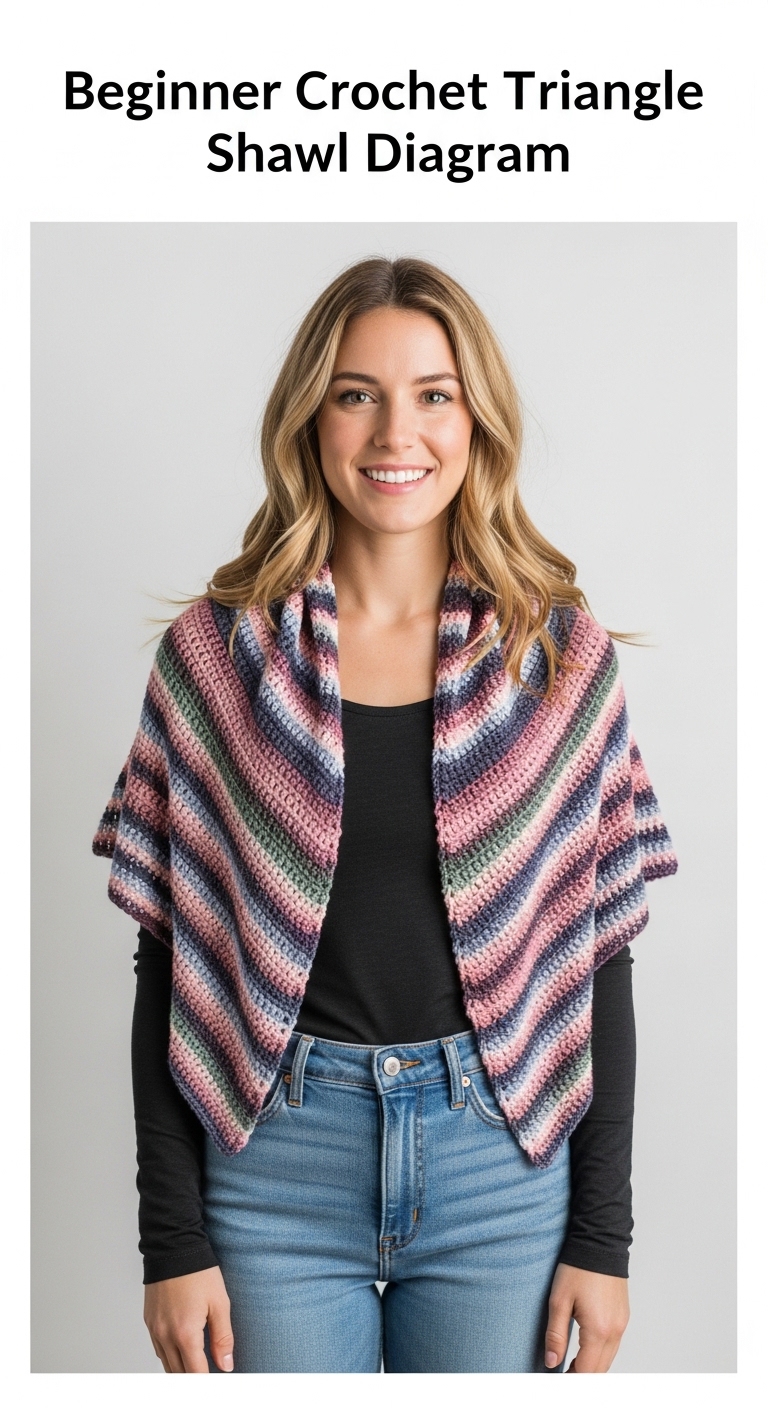
This Beginner Crochet Triangle Shawl Diagram is the friendliest starting point in the whole set. Love.Life.Yarn explains that the shawl begins in the center back, increases outward, includes a video tutorial, and offers a chart download from the post. That combination is excellent when you want to practice reading a crochet chart without diving straight into dense lace. The yarn handles the color changes for you, so the project stays interesting even though the repeat is simple. My best tip is to print the chart and highlight every completed row, especially if you tend to crochet in short sessions. Tutorial.
Hashtags: #crochetshawl #beginnercrochet #triangleshawl #crochetdiagram
Supplies:
- Self-striping yarn or your preferred yarn weight
- Crochet hook matched to yarn
- Tapestry needle
- Optional tassels for the points
Why it’s great: It gives beginners both a crochet chart and a very forgiving shape
Blue Belle Crochet Shawl

The Blue Belle Crochet Shawl is a beautiful finishing pick if you want a more decorative look without leaving wearable territory. Rich Textures says the shawl uses cluster stitches that resemble flower buds, is worked in fine weight cotton yarn, and is shown in the Blue Belle colorway with gradual vibrant changes. It also includes a free video tutorial, which helps when you want extra support beside the written instructions. Because the yarn gradient is part of the charm, I would avoid cutting the cake early unless you truly need to rebalance the color flow across the crochet body. Tutorial.
Hashtags: #crochetshawl #lacecrochet #crochetflowers #shawlpattern
Supplies:
- Fine #2 cotton yarn cake, color Blue Belle
- 3.5 mm crochet hook
- Yarn needle
- Fringe or edging tools as needed
Why it’s great: This crochet shawl has standout texture, lovely drape, and a colorway that does the styling for you.
Conclusion
Start with the shawl shape that feels easiest to read: center-out triangle, side-to-side triangle, or rectangle. Once you finish one crochet shawl with a clear chart or visual repeat, the next one gets much easier. Save this list so you can come back when you want a quick elegant project or a bigger lace challenge.
FAQs
1. What yarn is best for a crochet shawl?
For drape, lighter fibers and lighter yarn weights usually work best. Fingering, sport, light/DK, and fine cotton or alpaca blends are especially common in shawl patterns, while some easy wraps use worsted yarn for more coverage.
2. Should I machine wash or hand wash a crochet shawl?
Check the yarn label first. DROPS recommends following the yarn label and notes gentle care for merino and wool fibers; as a safe general rule, follow the most delicate fiber in your project when blends are involved.
3. How do I scale a shawl pattern up or down?
Most shawls scale well by adding or removing repeats. Several of these tutorials explicitly mention making the piece larger with more rows or longer by adjusting starting stitches or repeats.
4. Do I really need to block a crochet shawl?
Yes, especially for lace or openwork. Blocking helps crochet reach its intended shape and improves drape and stitch definition.
5. How do I keep edges neat and durable?
Use stitch markers at the first and last stitches, count repeats often, and add simple edging or finishing rows where the pattern provides them. That is especially helpful on ripple, lace, and triangle shawls.
6. How much yarn does a crochet shawl usually take?
It varies a lot by shape and yarn weight. In this set alone, examples range from about 984 yards for a rectangular worsted shawl to around 1181 yards for a light self-striping triangle, while some finer shawls use a single fine cotton cake.
7. Why is my shawl curling, stretching, or getting wavy?
Curling often points to tension or stitch-count issues, while stretching can happen from fiber choice, lack of blocking, or hanging the shawl instead of storing it flat. Blocking and careful repeat counting usually fix most shape problems.
8. What is the easiest way to photograph a crochet shawl for Pinterest?
Use soft natural light, a clean background, and show both the full shape and one close-up of the stitch texture. Triangle shawls look best slightly spread open so the point and edging are visible.