A good crochet dice bag does more than hold a set of polyhedrals. It keeps game night tidy, protects special dice, and gives you a fun small project you can actually finish in a sitting or two. I picked eight different crochet dice bag styles here so you can choose what fits your taste: simple drawstrings, scale textures, divided storage, and colorful stash-busting pouches. Each one comes from a different site, which keeps the list fresh and gives you a wider range of techniques to try. Start with the easiest shape, then move into pockets, texture, or sculpted fantasy looks once you want more challenge.
Crochet Lemon Peel Dice Bag
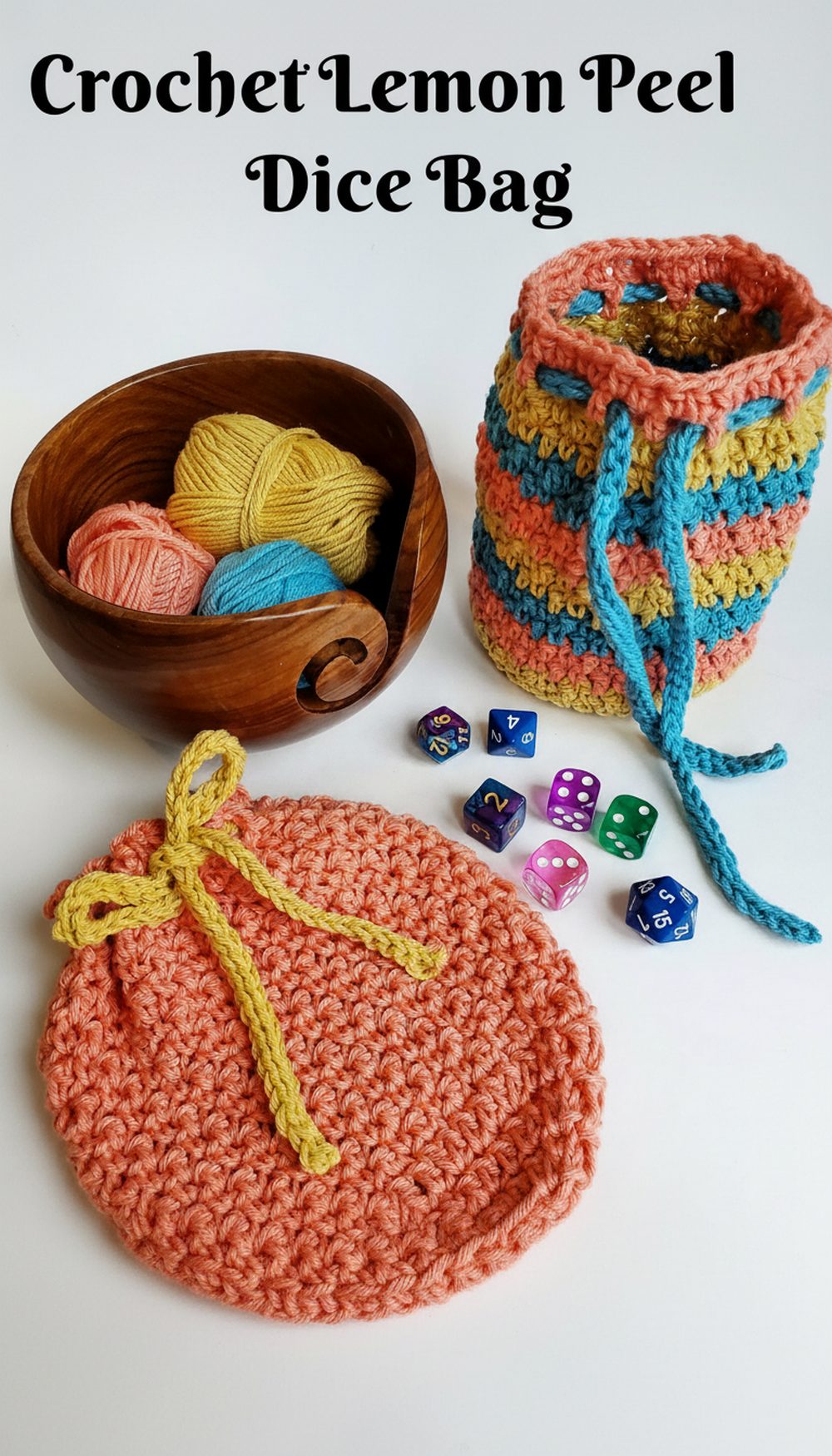
This Crochet Lemon Peel Dice Bag is a smart place to start if you want a clean, everyday pouch with nice texture and no fussy shaping. The pattern uses about 82 yards of worsted cotton and a 4 mm hook, so it is small enough for a quick make but sturdy enough for regular use. The lemon peel stitch gives the surface a subtle pebbled look that helps a simple bag feel finished. A practical tip is to place a stitch marker at the first stitch of each round so your texture stays perfectly aligned, especially if you add stripes. You can follow the full Crochet Dice Bag tutorial on Sweet Bee Crochet for the complete steps. Tutorial.
Hashtags: #CrochetDiceBag #DnDCrochet #CrochetPouch #TabletopGaming
Supplies:
- Worsted cotton yarn, about 82 yards
- 4.0 mm hook
- Yarn needle
- Scissors
Why it’s great:
It is beginner-friendly, durable, and polished enough to gift.
Crochet 8 Pocket Dice Bag
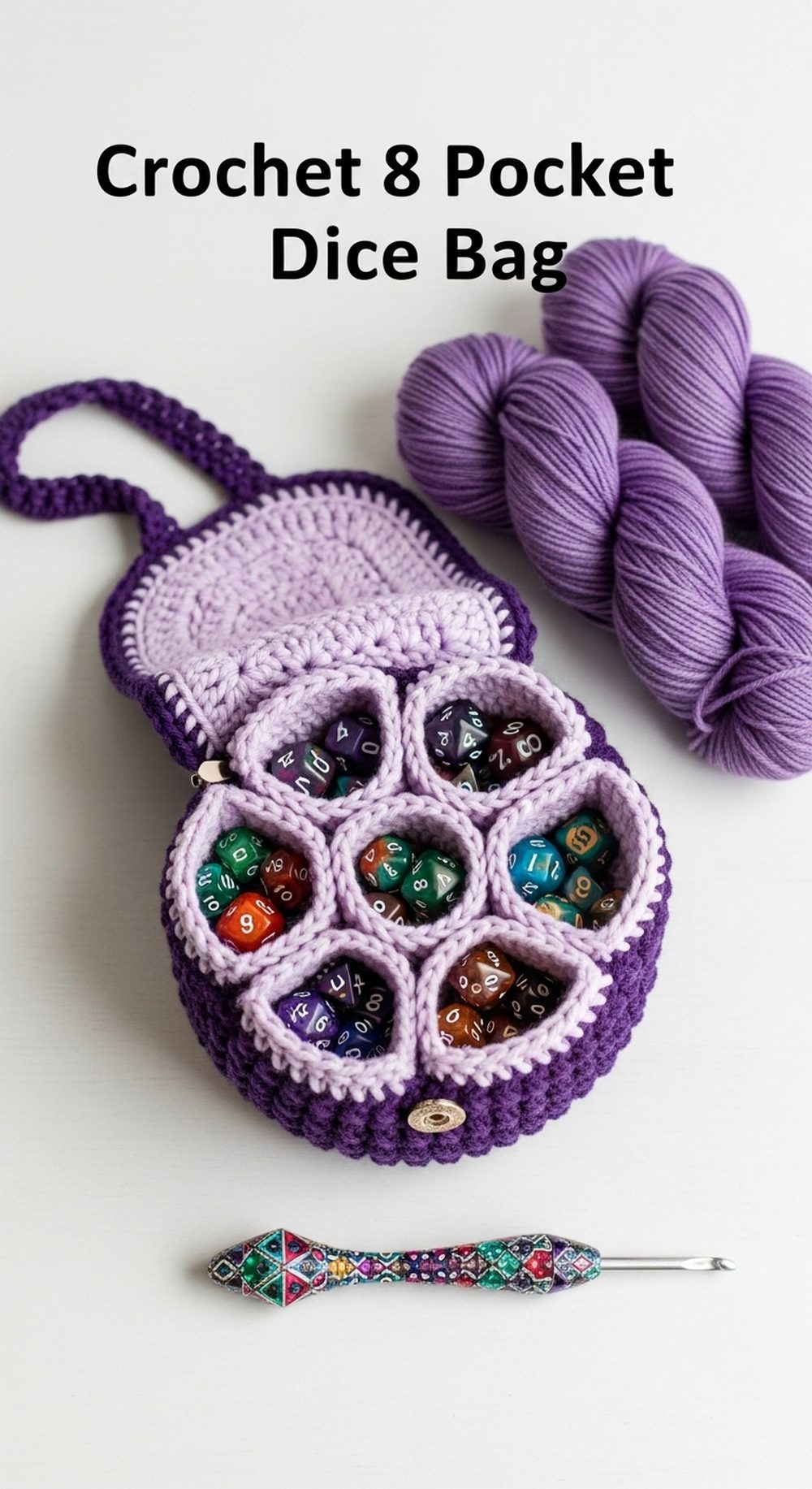
This Crochet 8 Pocket Dice Bag is the best pick here if you like to sort sets by color, campaign, or system. The finished size is about 7 inches across and 6 inches tall, and the pattern uses 270 to 350 yards of worsted yarn with a 4 mm hook. The sample colors are Amethyst and Bergamot, which create a bold purple shell with pale contrast pockets inside. My biggest tip is to pin or clip the pocket panel in place before sewing so every section stays even. The full Evan’s 8 Pocket Dice Bag tutorial walks you through the construction clearly. Tutorial.
Hashtags: #CrochetDiceBag #DiceStorage #DnDAccessories #CrochetOrganizer
Supplies:
- Worsted acrylic yarn, 270–350 yards total
- 4.0 mm hook
- Yarn needle
- Scissors
- 8 stitch markers or pins
Why it’s great:
It keeps multiple dice sets separated without needing several bags.
Crochet Dragon Scale Dice Bag
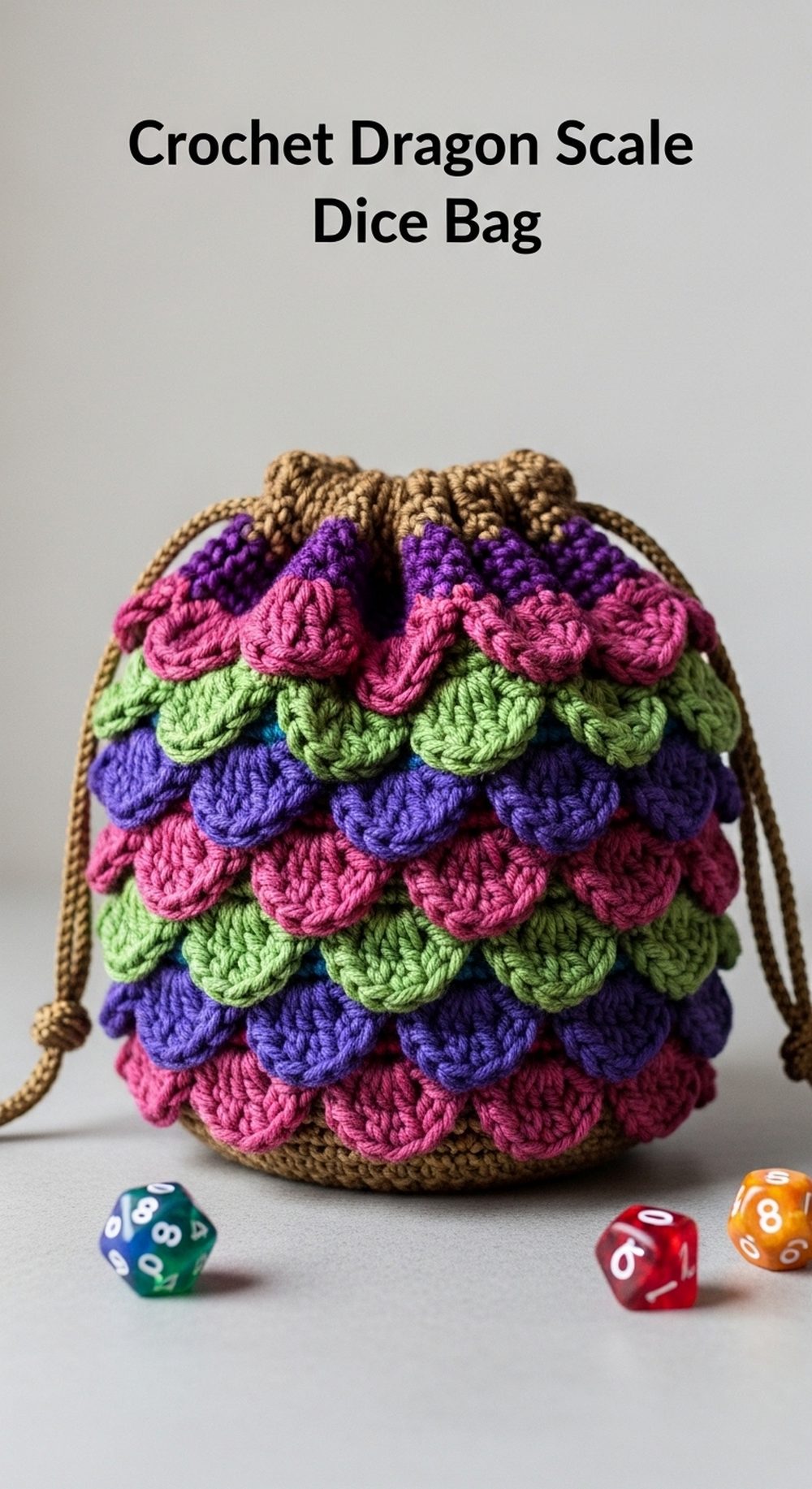
This Crochet Dragon Scale Dice Bag is for anyone who wants a fantasy look without making a huge project. The pattern includes two sizes and uses either one skein of worsted yarn for the smaller bag or two skeins for the larger version, plus a 5 mm hook. The crocodile-style scale texture gives it that dramatic dragon-skin finish gamers love. Because the stitch builds on posts, the most useful tip is to finish one full scale repeat before setting the project down, so it is easy to find your place again later. Sam Bartley’s Dragon Scale Dice Cinch Bag tutorial is the one to follow for this bold textured style. Tutorial.
Hashtags: #CrochetDiceBag #DragonScaleCrochet #FantasyCrochet #DnDGifts
Supplies:
- Worsted yarn, 1 skein small or 2 skeins large
- 5.0 mm hook
- Tapestry needle
- Scissors
Why it’s great:
It looks dramatic and special while still being a practical pouch.
Crochet Dragon Egg Dice Bag
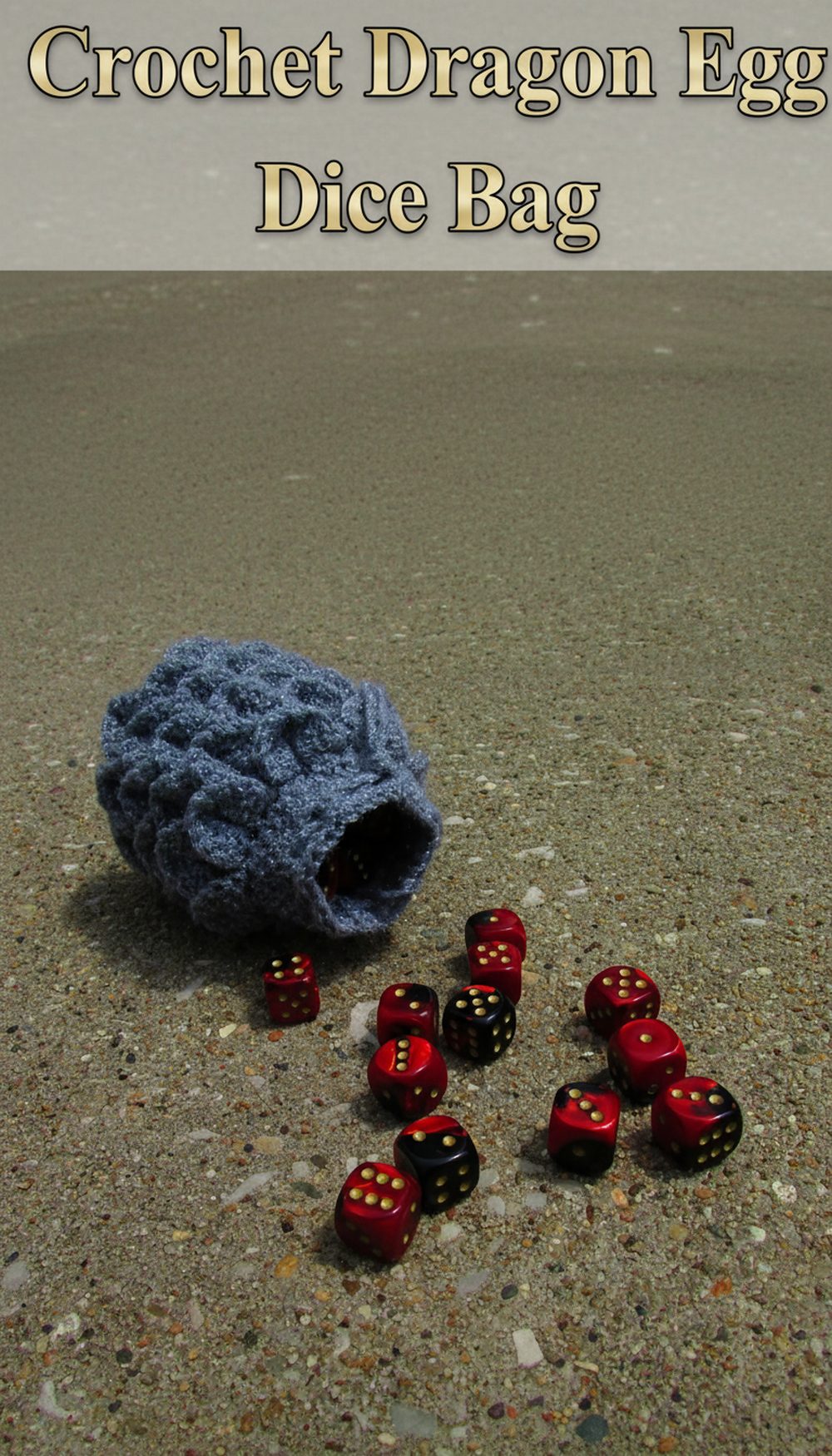
This Crochet Dragon Egg Dice Bag has a more compact, egg-like shape that feels especially satisfying in the hand. Nic’s Knits uses a modified crocodile stitch for smaller openings than the standard version, and the sample was made in a metallic fingering-weight yarn with a braided cord and wooden beads at the ends. It is sized for one standard set of role-playing dice, which makes it ideal for gifting. A useful tip is to choose a firmer yarn than you normally would, because the pattern holds its shape best that way. The Dragon Egg Dice Bag tutorial on Nic’s Knits is a lovely option when you want a fantasy piece with a polished finish. Tutorial.
Hashtags: #CrochetDiceBag #DragonEggCrochet #FantasyGaming #CrochetGiftIdeas
Supplies:
- Fingering-weight yarn, preferably firm or metallic
- Hook to suit your yarn
- Yarn for braided drawcord
- Wooden beads
- Yarn needle
Why it’s great:
It feels special, compact, and perfect for a single favorite dice set.
Crochet Dice or Trinket Bag 3 Ways
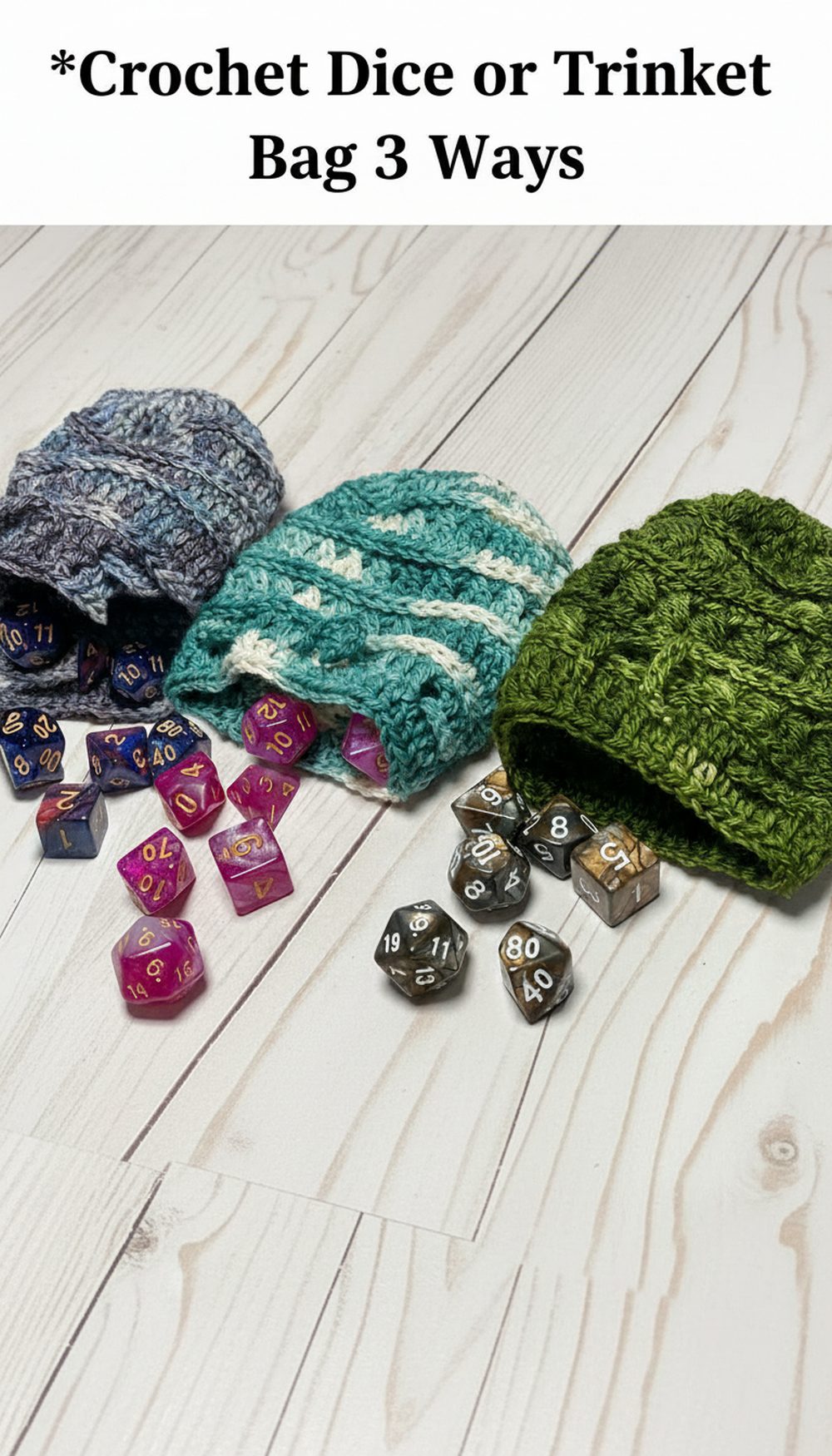
This Crochet Dice or Trinket Bag 3 Ways idea is perfect if you like trying texture without changing the overall shape. The bags are about 5 inches tall and 4 inches across when made in sport-weight yarn, and the samples use beautiful shades called Provence, Gummy Bear, and Guava. There are three stitch versions, so you can pick the one that matches your comfort level and still end up with a useful pouch. My tip is to make one sample in the recommended sport weight before swapping to worsted, because yarn size changes the finished proportions a lot. The 5 Little Monsters tutorial gives you all three crochet bag options in one place. Tutorial.
Hashtags: #CrochetDiceBag #TrinketBag #SmallCrochetProject #YarnStashBuster
Supplies:
- Sport-weight yarn
- G crochet hook
- Yarn needle
- Scissors
Why it’s great:
You can test three textures without learning three completely different bag constructions.
Crochet Lantana Dice Bag
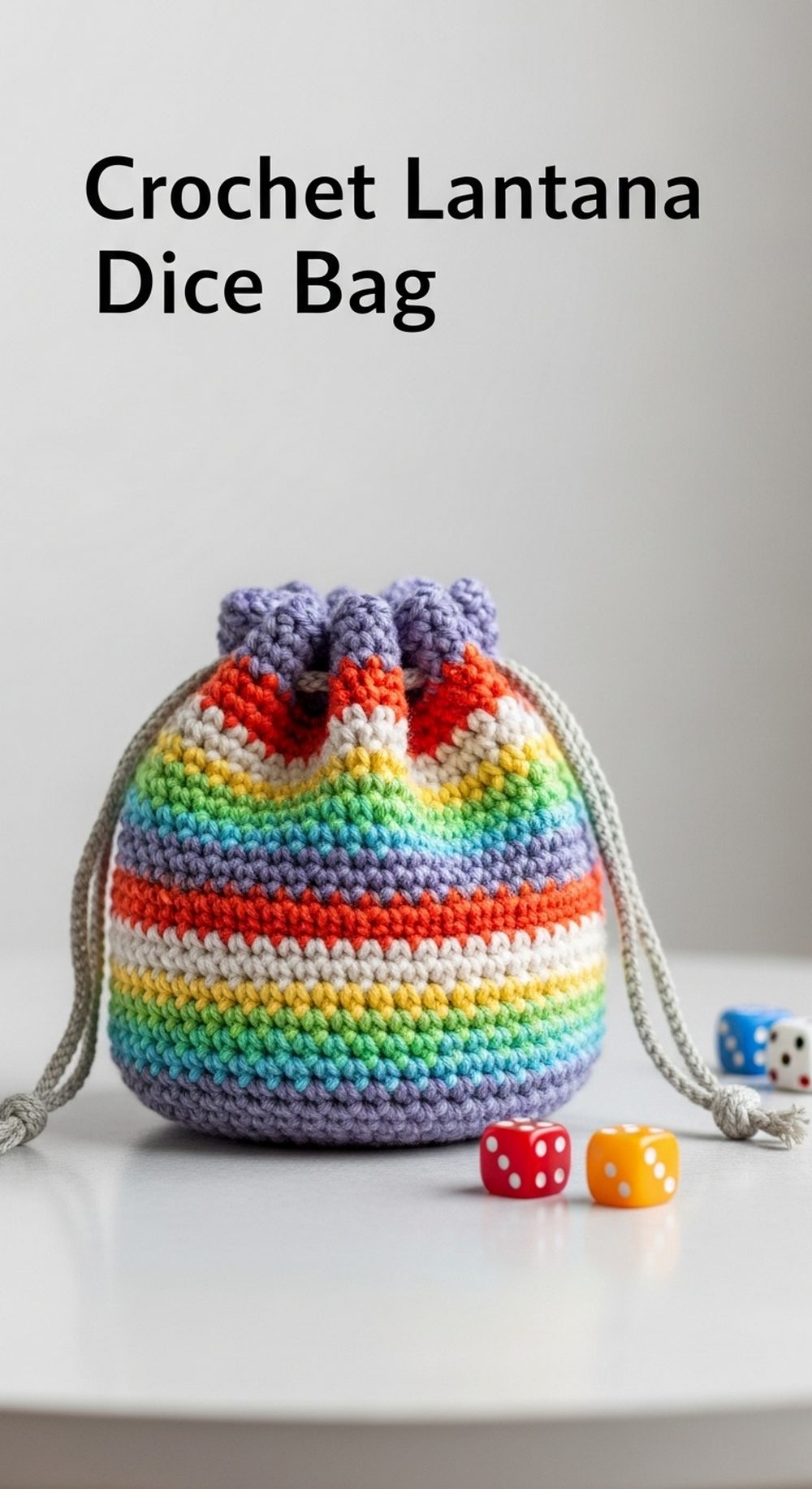
This Crochet Lantana Dice Bag is a great stash-friendly project because it only needs about 50 to 55 yards of yarn and a 5 mm hook. The pattern uses Red Heart Super Saver in Retro Stripe, so the color changes do the decorating for you without extra ends to weave in. That makes it especially nice for quick gifts or a last-minute convention project. The most helpful tip here is to keep your tension even around the eyelet round so the drawstring closes smoothly instead of bunching. The Yarn Bean Fiberworks Lantana Dice Bag tutorial is ideal when you want a simple crochet dice bag with strong color payoff and minimal effort. Tutorial.
Hashtags: #CrochetDiceBag #StripedCrochet #QuickCrochetProject #GamingAccessories
Supplies:
- Red Heart Super Saver Retro Stripe, 50–55 yards
- 5.0 mm hook
- Yarn needle
- Scissors
Why it’s great:
It is fast, colorful, and excellent for using a small amount of self-striping yarn.
Crochet Divided Dice Bag
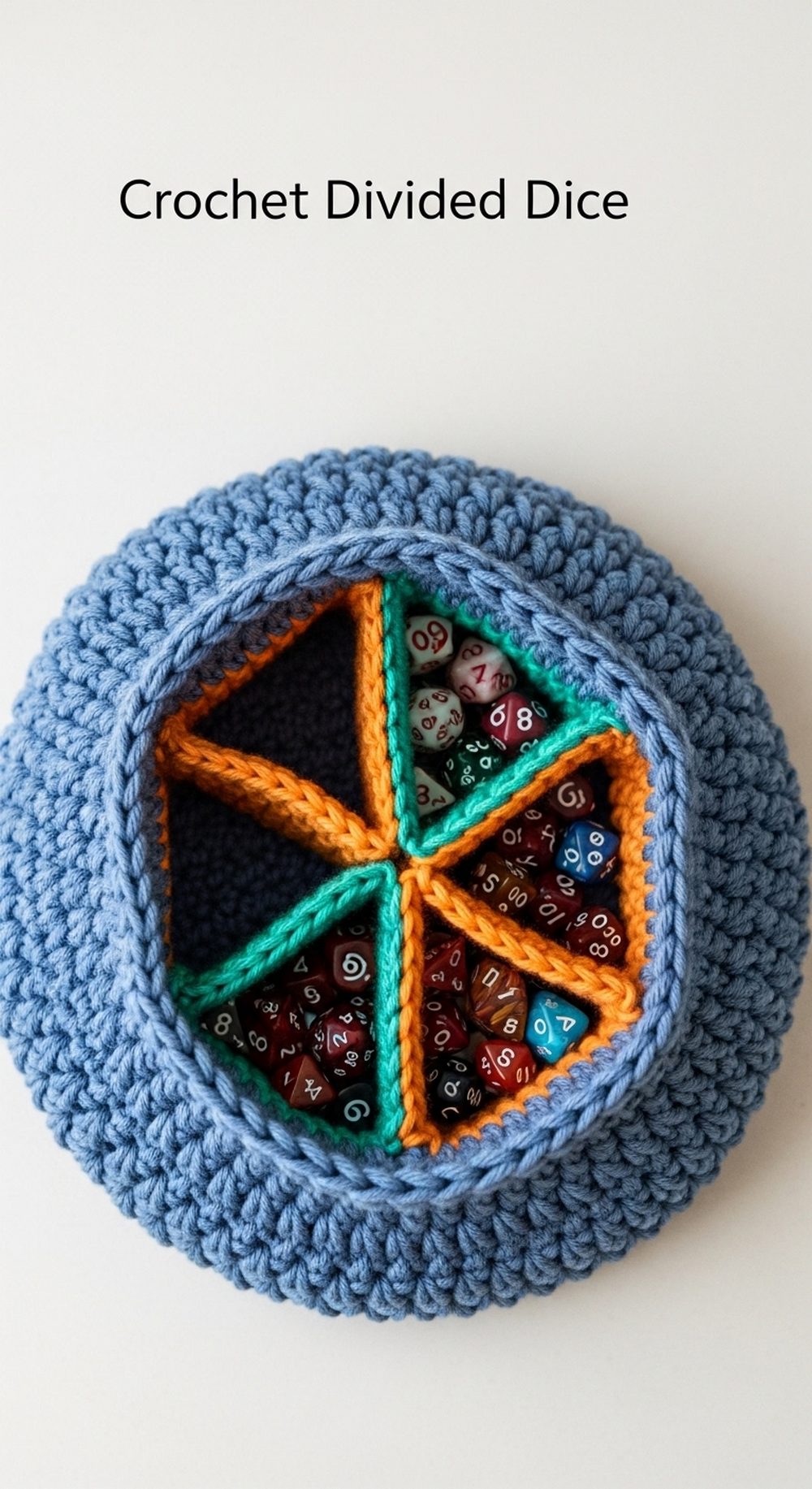
This Crochet Divided Dice Bag is the one to choose if you want serious organization without making several separate pouches. Graceface Creates uses about 400 yards of worsted yarn for the main bag and about 60 yards for the dividers, both held double, with a 5 mm hook. The finished bag includes six compartments and can be customized wider or deeper if needed. Since construction is the trickiest part, my tip is to measure your center divider against the inside width before sewing anything down. That one check saves a lot of frustration later. The Divided Dice Bag tutorial is a smart project for crocheters who want function first. Tutorial.
Hashtags: #CrochetDiceBag #DividedDiceBag #CrochetOrganization #TTRPGAccessories
Supplies:
- Worsted yarn, about 400 yards main color held double
- Worsted yarn, about 60 yards contrast color held double
- 5.0 mm hook
- Sewing needle
- Stitch markers or pins
- Measuring tape
Why it’s great:
It stores multiple sets neatly and feels more like a true organizer than a basic pouch.
Crochet Use Any Yarn Dice Bag
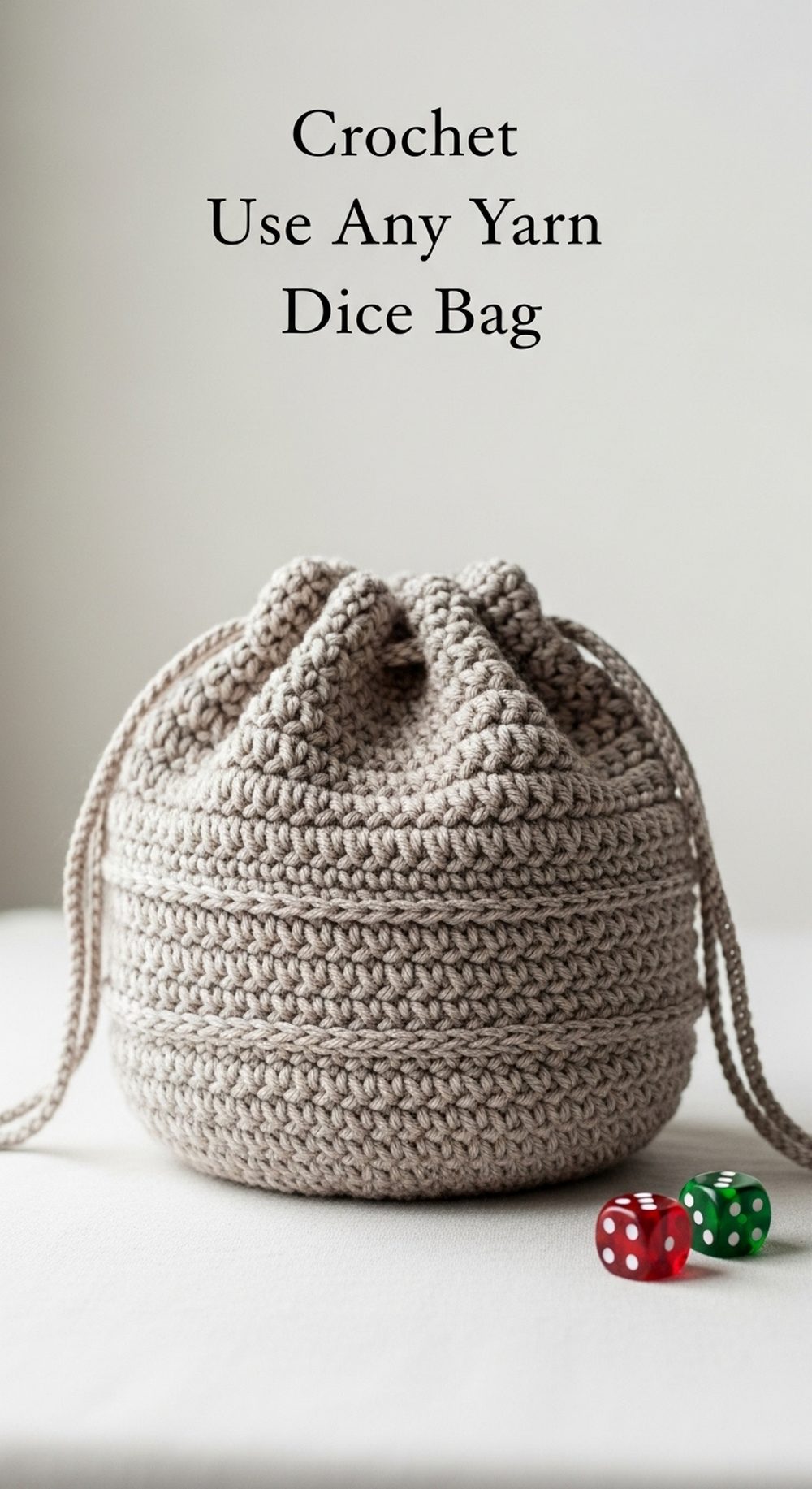
This Crochet Use Any Yarn Dice Bag is the most flexible option on the list, especially if you want to work from stash instead of buying something specific. Purple Rose Embroidery explains how to keep increasing the base until it reaches the width you want, then work the body and closing section to suit your yarn and hook. That makes it a strong choice for leftovers in cotton, acrylic, or blends. A practical tip is to write down your stopping round for the base so you can easily make a matching second bag later. The Use Any Yarn Dice Bag tutorial is excellent when you want a reliable formula instead of one fixed size. Tutorial.
Hashtags: #CrochetDiceBag #StashBusterCrochet #DrawstringPouch #CrochetFormula
Supplies:
- Any yarn weight you want to use
- Hook matched to your yarn
- Yarn needle
- Scissors
- Optional stitch marker
Why it’s great:
It lets you adapt the pattern to the yarn you already have on hand.
Conclusion
Pick one crochet dice bag that matches how you actually play. A simple pouch is perfect for a fast win, while pockets and dividers make sense if you carry several sets. These projects are small, useful, and easy to personalize with color and texture. Save this list for later, and share it with the gamer or crocheter in your group.
FAQs
What yarn is best for crochet dice bags?
Cotton is great for firmness and crisp stitch definition. Acrylic is lighter and often softer on the hands. Wool blends can look beautiful in textured fantasy styles, especially dragon egg or scale bags.
Can I machine wash a crochet dice bag?
Usually yes for cotton and many acrylics, but always check the yarn label first. Air drying is safer because it helps the bag keep its shape and prevents drawstrings or textured stitches from distorting.
How do I scale a crochet dice bag pattern up or down?
Increase the base for extra width, add body rounds for height, and keep the eyelet or drawstring round close to the top. Test with the actual dice you plan to store before finishing.
Which fibers are safest for kitchen or bath use if I repurpose the pouch idea?
Cotton is the safest choice for moisture and frequent washing. Avoid acrylic near high heat, since it can soften or melt with direct heat exposure.
How do I make the top edge more durable for daily use?
Use a firm eyelet round, add an extra plain round before the drawstring section, and weave the cord through evenly. Reinforced stitches around the opening help prevent stretching.
How much time and yarn do crochet dice bags usually take?
Most simple bags take under two hours and well under one skein. Organizer or divider versions take longer because of assembly and extra structure.
Why is my bag curling, stretching, or getting wavy at the edge?
Curling usually means the base needs more increase rounds or looser tension. Wavy edges often mean too many increases. Stretching near the top can happen if the drawstring round is too loose.
How can I photograph my finished crochet dice bag well?
Use window light, keep the background simple, and place a few dice nearby for scale. A slightly angled top-down shot usually shows both the shape and the stitch texture nicely.